Encyclopedia entry
Bitter aloe
LCAloe ferox
Also known as: Cape aloe, iKhala, Bitteraalwyn
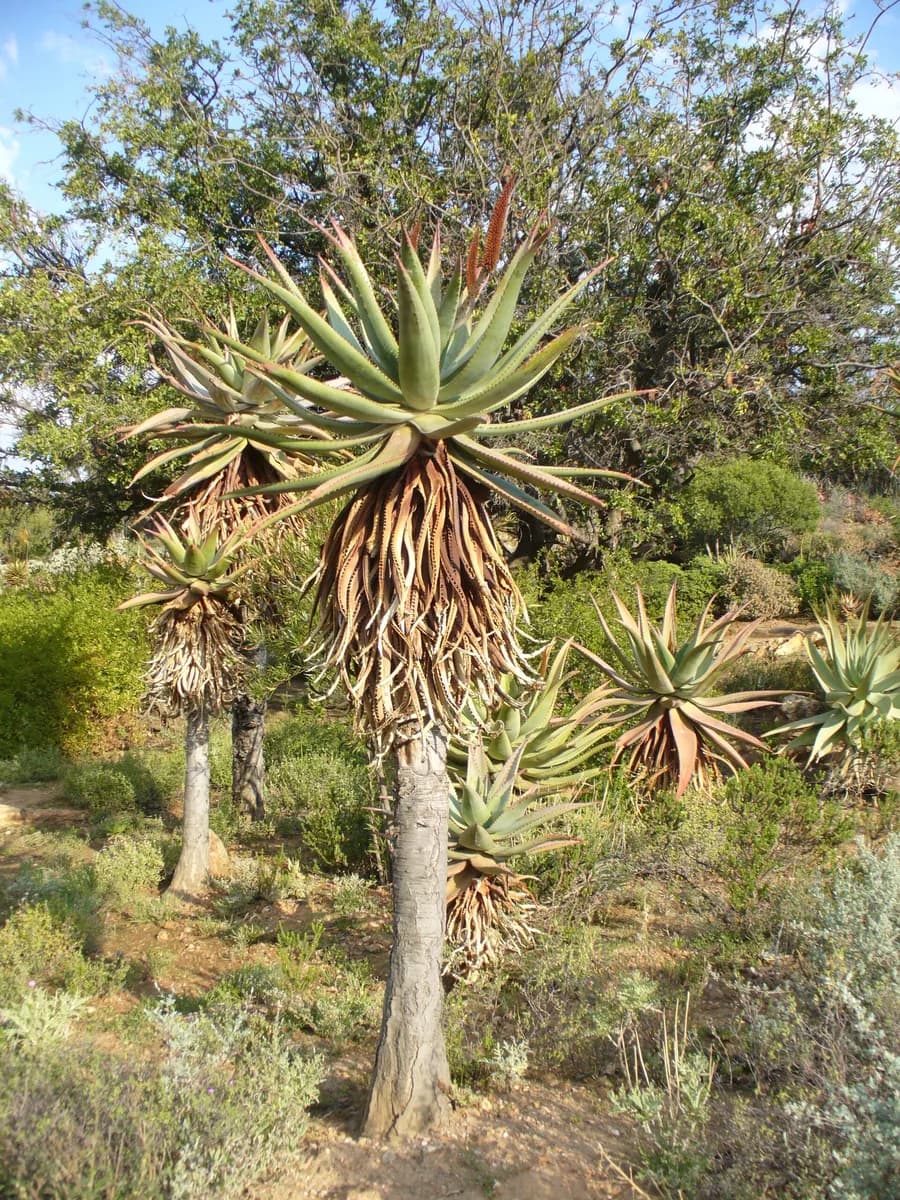
Aloe ferox is a tall, single-stemmed aloe native to southern Africa. Its leaf exudate and inner leaf material support long-standing local use and a regulated botanical-products trade. SANBI assesses the species as Least Concern nationally, while noting that harvesting intensity and habitat pressures vary locally. Muranga records should therefore distinguish the taxon, plant part, harvest method, permit evidence and chain of custody rather than treating the species name alone as proof of sustainability.
Identification and ecology
Mature plants form a rosette of thick, spiny leaves above a persistent skirt of old leaves. Branched flower heads carry orange-red to yellow flowers and are conspicuous in the dry season. The species occupies several vegetation types and often persists in open or disturbed sites.
Documented use and material
The dried bitter leaf exudate is the source of Cape aloe; leaf gel and whole-leaf preparations are separate materials with different chemistry and controls. Traditional and commercial uses include topical preparations and stimulant-laxative products. A provenance record must state the plant part and processing route.
Stewardship and trade
SANBI's national assessment records the species as widespread and common, but local overharvesting can still damage stands. Responsible sourcing requires harvest rotation, retained leaf area, legal collection authority and batch evidence that links processed material to an approved source.
Documented use & evidence
Leaf exudate contains hydroxyanthracene derivatives including aloin; inner leaf material has a different polysaccharide-rich profile. Regulatory monographs limit oral use of stimulant-laxative preparations and identify contraindications. These records describe documented use and chemistry, not a recommendation to self-treat.
This botanical record is for provenance and research context. Documented traditional use is not medical advice, and laboratory findings do not establish clinical efficacy or safety. Use regulated products only under appropriate professional guidance.
Research & evidence record
Botanical and pharmacognosy literature distinguishes the bitter exudate from gel, a distinction that is essential for identity, safety and product claims. Current South African non-detriment work also evaluates trade volume, harvesting practice and population resilience rather than relying on the Least Concern label alone.
ESG & Nature Impact
Traceable harvesting can support rural livelihoods while protecting source populations. Useful assurance measures include collector authorisation, geofenced source areas retained privately, harvest-date evidence, regeneration checks and reconciliation between raw leaf mass and processed output.
Society & Culture
Aloe harvesting and processing have a long economic history in the Cape and Eastern Cape. Benefit-sharing and supplier terms should recognise local harvesting knowledge without publishing personal identities or sensitive collection locations.
External Resources
References
Version 2 · Last updated 7/15/2026 View revision history