Encyclopedia entry
Devil's claw
LCHarpagophytum procumbens
Also known as: Grapple plant, Sengaparile, Duiwelsklou
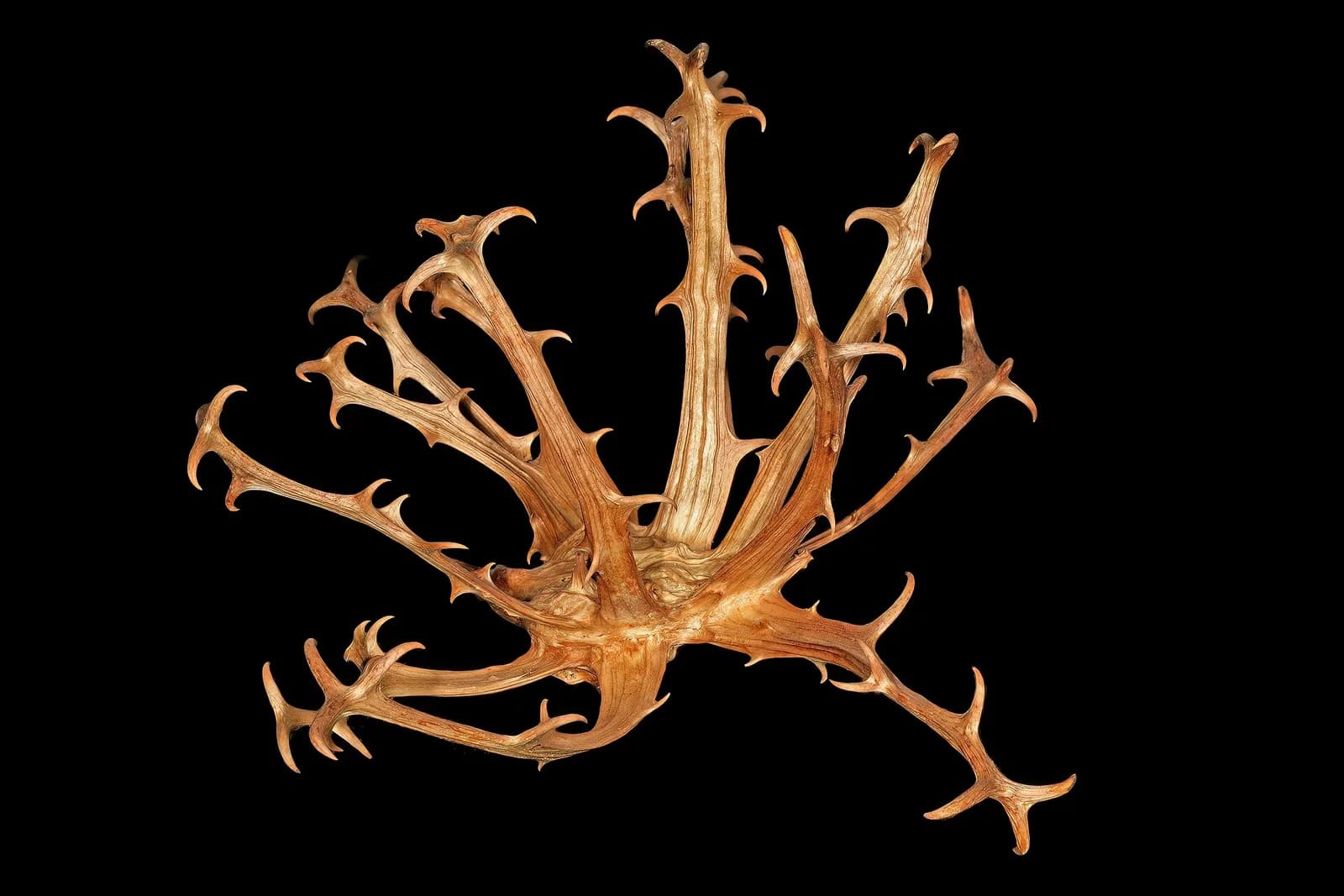
Harpagophytum procumbens is a dryland herb named for its hooked fruit. Its secondary storage tubers enter an international herbal trade, making harvest method, species identity and benefit-sharing central provenance questions. Sustainable systems leave the primary tuber intact, record collection areas privately and reconcile collector deliveries to cleaned, dried material.
Identification and ecology
The plant trails along sandy ground, produces pink-purple tubular flowers and develops distinctive woody fruits with curved arms. A primary tuber supports the plant while secondary tubers are the traded material.
Documented traditional use
Southern African communities have used tuber preparations for pain, fever and digestive complaints. Commercial extracts are commonly standardised to iridoid glycosides such as harpagoside. Traditional use, herbal registration and clinical evidence are different evidence categories.
Harvest and benefit-sharing
Poor harvesting can kill plants or remove too much regenerative tissue. A defensible lot records collector consent and terms, species verification, secondary-tuber harvest practice, drying loss and legal export documentation where applicable.
Documented use & evidence
European herbal monographs recognise specified devil's-claw root preparations for traditional relief of minor joint pain and mild digestive complaints. Evidence is product- and preparation-specific; interactions, contraindications and delayed diagnosis remain relevant safety concerns.
This botanical record is for provenance and research context. Documented traditional use is not medical advice, and laboratory findings do not establish clinical efficacy or safety. Use regulated products only under appropriate professional guidance.
Research & evidence record
Research has focused on iridoid glycosides and standardised extracts. Trade studies emphasise that ecological sustainability depends on harvest depth, retained primary tubers, recovery periods and transparent value distribution to harvesters.
ESG & Nature Impact
A well-governed supply chain can generate dryland income with low land conversion. Key metrics include plant survival after harvest, harvest rotation, collector payment, rejected-material rates and reconciliation of fresh to dry mass.
Society & Culture
Devil's claw is strongly associated with Indigenous and local knowledge in the Kalahari region. Access and benefit-sharing records should name the governing community or agreement only where publication consent exists.
External Resources
References
Version 2 · Last updated 7/15/2026 View revision history