Encyclopedia entry
African potato
LCHypoxis hemerocallidea
Also known as: Star flower, iNkomfe, Inkomfe
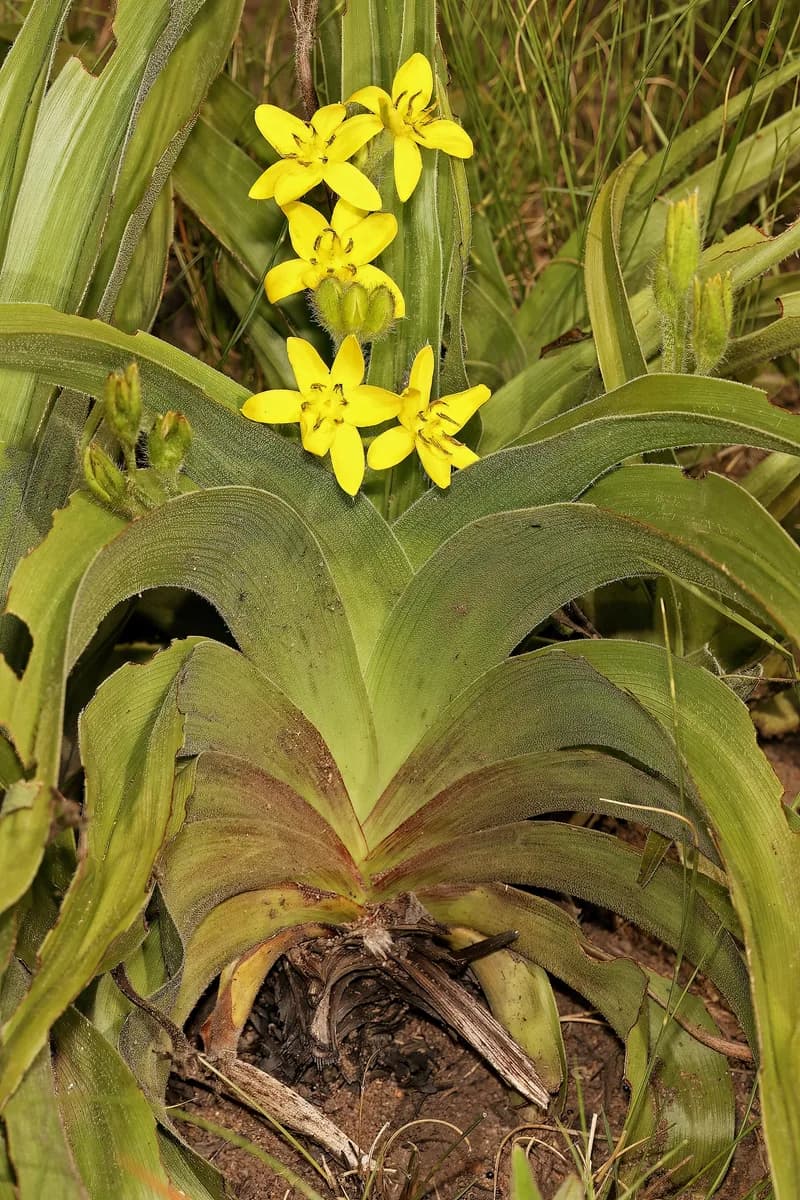
Hypoxis hemerocallidea is a grassland geophyte with pleated, hairy leaves, yellow star-shaped flowers and a persistent underground corm. The corm is widely traded as African potato. Because harvest removes the plant's storage organ, provenance needs to show whether material was cultivated or legally wild-collected and how source populations are monitored.
Identification and ecology
Leaves arise from the base and the yellow flowers sit on short stalks. The robust vertical corm and contractile roots distinguish the plant's underground form. It occurs across several southern African grassland and savanna regions.
Documented use and chemistry
Corm preparations are documented in southern African traditional practice. Reported constituents include hypoxoside, which can convert to rooperol, and phytosterols. Composition varies with identity, processing and formulation.
Harvest risk and controls
Corm removal is destructive. Cultivation, nursery propagation and harvest quotas can reduce pressure, while batch records should retain source authority, plant-part identity, collection date and mass-balance evidence.
Documented use & evidence
Laboratory and limited clinical research has examined hypoxoside/rooperol and sterol-containing preparations, but broad immune, cancer or HIV claims are not established by the botanical record. Products may interact with treatment; clinical care must not be delayed or replaced.
This botanical record is for provenance and research context. Documented traditional use is not medical advice, and laboratory findings do not establish clinical efficacy or safety. Use regulated products only under appropriate professional guidance.
Research & evidence record
Pharmacological research explains how hypoxoside can be converted by enzymes to rooperol. That biochemical pathway does not by itself prove efficacy in people, so Muranga separates analytical findings, traditional-use records and clinical evidence.
ESG & Nature Impact
Cultivation and corm replanting can shift supply away from destructive wild extraction. Corporate buyers should track propagation source, survival, harvest age and payments to participating growers or knowledge holders.
Society & Culture
African potato is highly visible in formal and informal southern African herbal markets. Public information should respect the communities associated with its use while avoiding claims that commercialise knowledge without consent.
External Resources
References
Version 2 · Last updated 7/15/2026 View revision history