Encyclopedia entry
African cherry
VUPrunus africana
Also known as: Red stinkwood, Pygeum, uMdumezulu
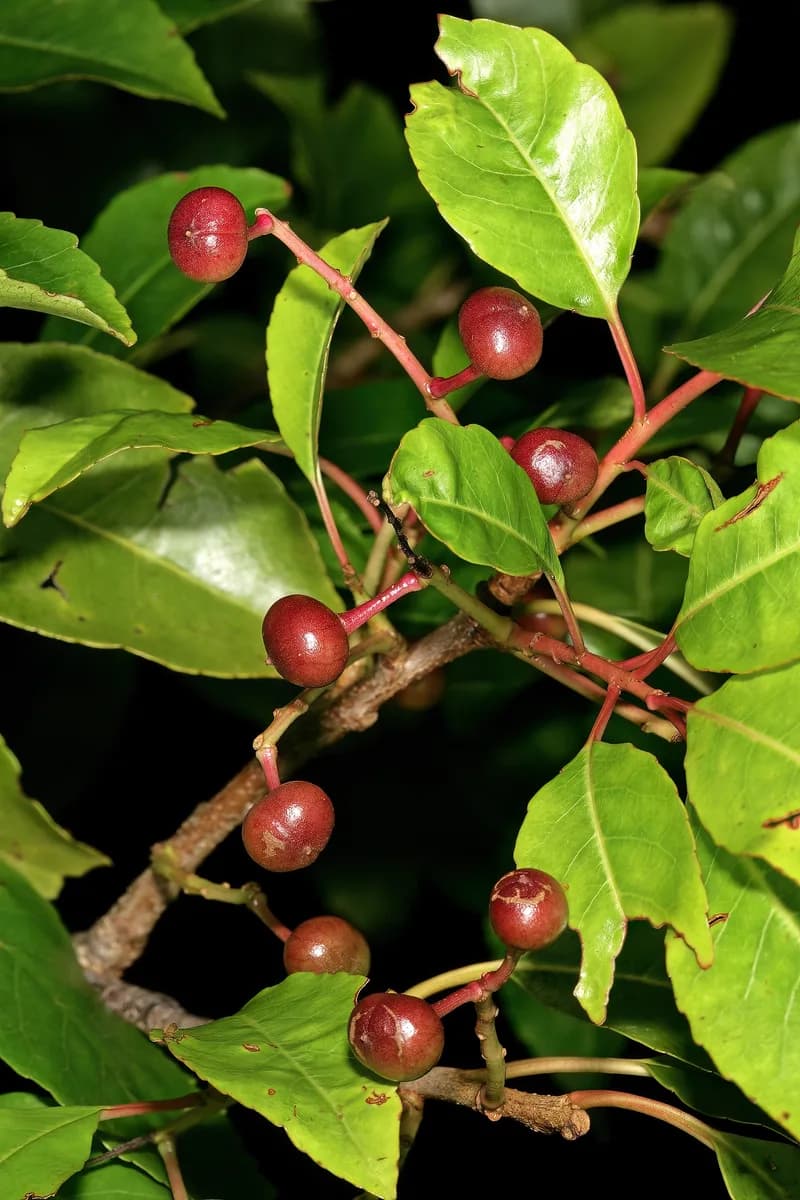
Prunus africana is a large Afromontane forest tree whose bark is traded internationally for herbal products. It is globally Vulnerable and listed in CITES Appendix II. Provenance must establish legal source, non-detrimental harvest, bark-stripping method, recovery interval, export controls and benefit distribution; a supplier declaration without forest evidence is not sufficient.
Identification and ecology
The tree has dark, fissured bark, glossy leaves with finely toothed margins and small fruits that ripen from red to dark purple. It contributes food and forest structure across fragmented montane habitats.
Documented use and products
Bark has local medicinal histories and is processed commercially into phytosterol-rich extracts used in products for urinary symptoms associated with benign prostatic enlargement. Evidence and authorisation apply to defined extracts, not unsupervised bark preparations.
Conservation and trade
Unsustainable ring-barking can kill trees, while heavy stripping reduces health and reproduction. CITES documentation, harvest inventory, strip dimensions, retained bark, recovery monitoring and export reconciliation are key assurance records.
Documented use & evidence
Some standardised bark extracts have been clinically studied for urinary symptoms, with variable evidence quality and product composition. Symptoms can indicate conditions requiring diagnosis; botanical material should not replace medical evaluation.
This botanical record is for provenance and research context. Documented traditional use is not medical advice, and laboratory findings do not establish clinical efficacy or safety. Use regulated products only under appropriate professional guidance.
Research & evidence record
Research has characterised phytosterols and other bark constituents and compared harvest practices. Conservation evidence consistently shows that harvest intensity and technique determine whether individual trees recover.
ESG & Nature Impact
Responsible supply can support forest custodians and create incentives to retain mature trees. Core indicators include legal quota, tree inventory, post-harvest survival, regeneration, CITES reconciliation and payments at community level.
Society & Culture
The species links local forest use to a high-value international market. Benefit-sharing, transparent pricing and community forest rights are therefore part of the provenance story, not optional narrative additions.
External Resources
References
Version 2 · Last updated 7/15/2026 View revision history