Encyclopedia entry
Cancer bush
LCLessertia frutescens
Also known as: Kankerbos, Balloon pea, Lessertia
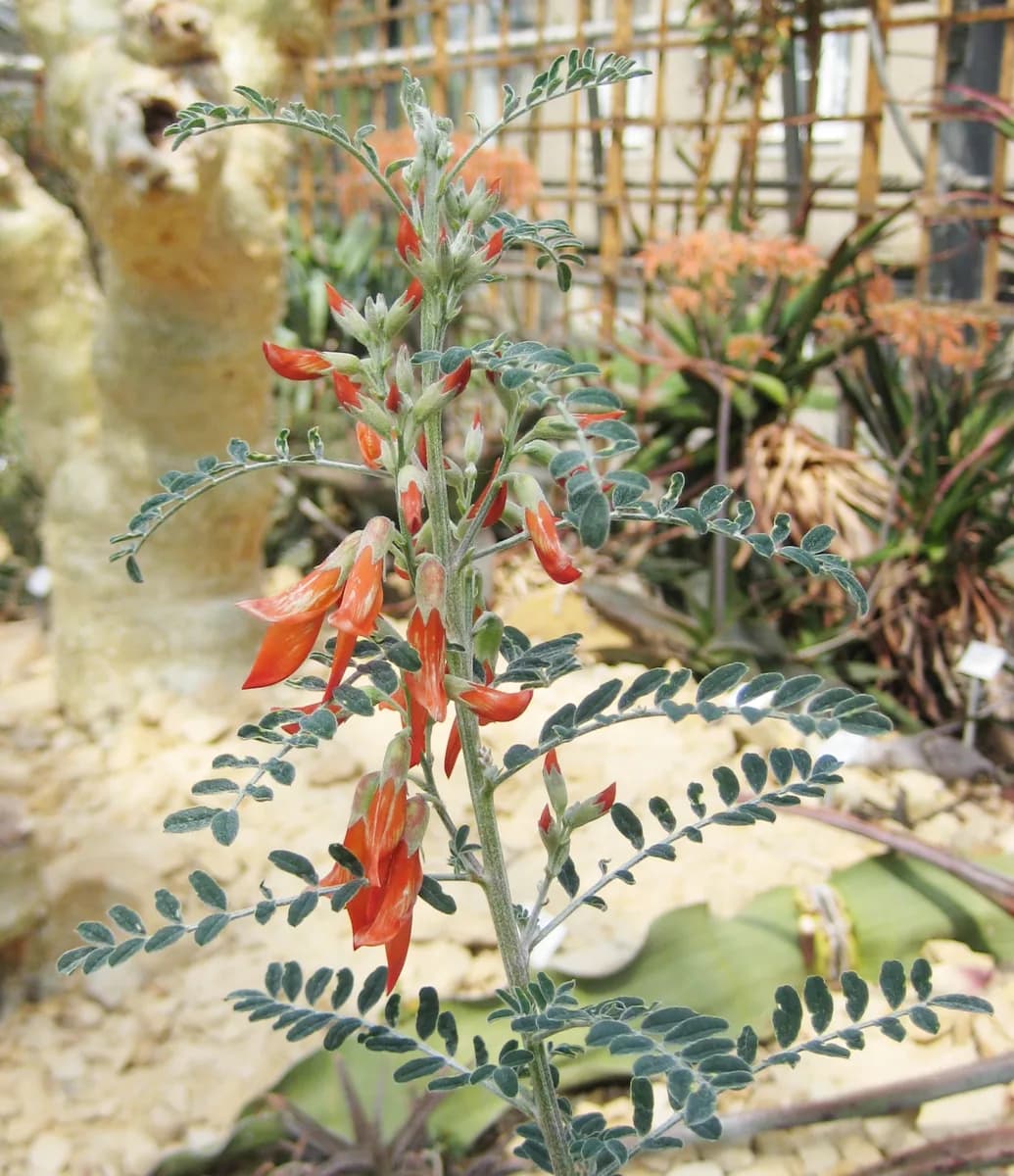
Lessertia frutescens, widely known under the synonym Sutherlandia frutescens, is a southern African shrub with red flowers and inflated pods. It has a broad traditional-use record and a modern supplement trade. The accepted name, older commercial name, plant part, cultivation source and consented knowledge attribution all need to remain visible in provenance.
Taxonomy and identification
Kew treats Sutherlandia frutescens as a synonym of Lessertia frutescens. The plant has pinnate grey-green leaves, red pea flowers and conspicuous balloon-like pods. Recording both names prevents broken historical and commercial links.
Documented traditional use
The plant is documented in several southern African traditions as a tonic and for varied complaints. Commercial products commonly use aerial material. Such history should be described without turning traditional knowledge into an unsupported universal indication.
Cultivation and provenance
The species can be cultivated from seed, supporting traceable supply. Records should identify seed or mother-stock source, plant part, harvest date, drying and testing, together with any community knowledge or benefit-sharing agreement.
Documented use & evidence
Human studies are limited and do not substantiate broad cancer, HIV or immune-treatment claims. Constituents such as pinitol, canavanine and saponins have been investigated, but laboratory activity is not clinical proof. It should not replace prescribed treatment.
This botanical record is for provenance and research context. Documented traditional use is not medical advice, and laboratory findings do not establish clinical efficacy or safety. Use regulated products only under appropriate professional guidance.
Research & evidence record
Taxonomic revision moved the accepted species to Lessertia, while Sutherlandia remains common in commerce and literature. Research spans chemistry, safety and small human studies; conclusions remain narrower than many marketing claims.
ESG & Nature Impact
Cultivation can support small growers and reduce uncertain wild sourcing. Corporate programmes should report verified hectares or plant counts, harvest yield, testing, buyer terms and benefit-sharing rather than wellness claims.
Society & Culture
The species has knowledge associations across multiple southern African communities. Attribution should be specific, consented and linked to the actual teaching or record instead of using a generic cultural label.
External Resources
References
Version 2 · Last updated 7/15/2026 View revision history