Encyclopedia entry
Pepper-bark tree
ENWarburgia salutaris
Also known as: Peperbasboom, isiBaha, Mulanga, Molaka
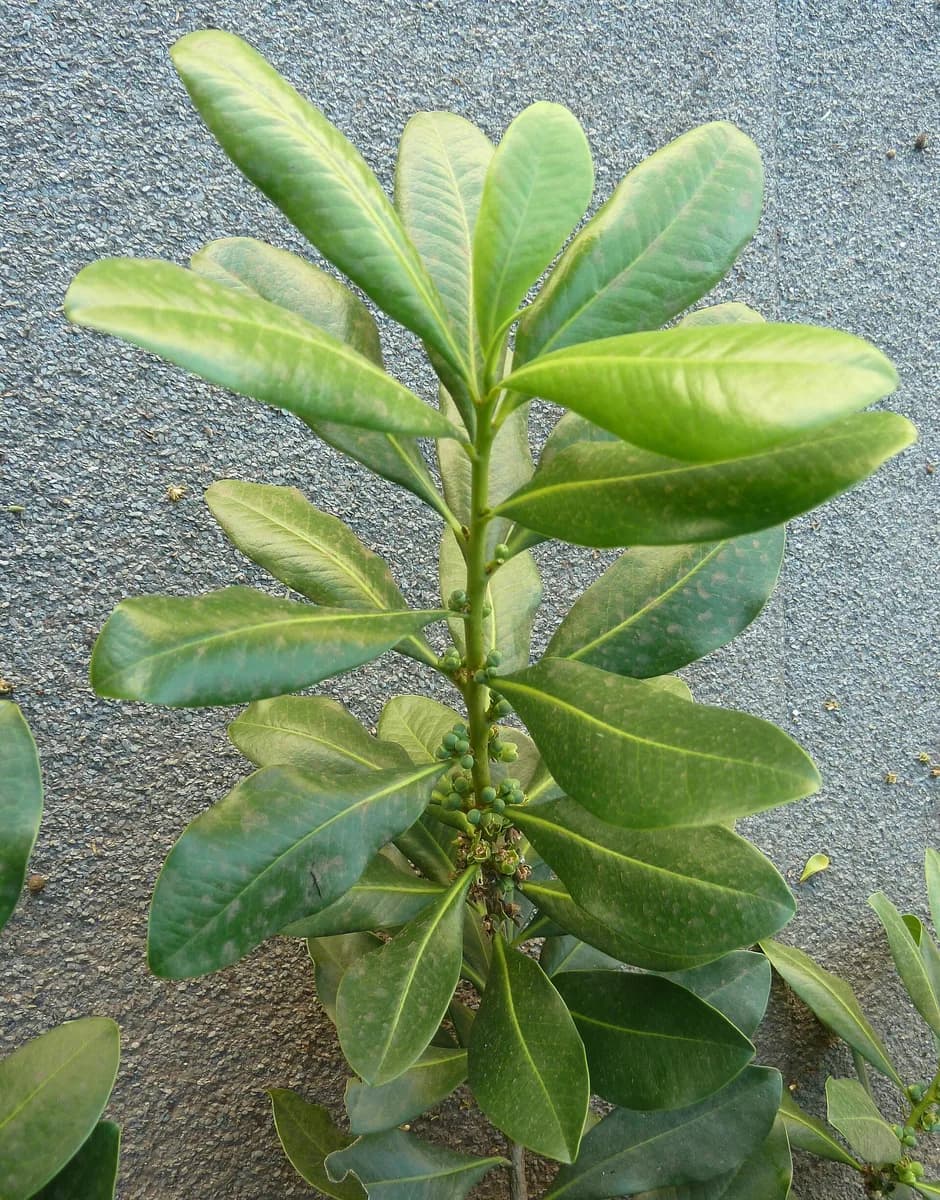
Warburgia salutaris, the pepper-bark tree, is Endangered in South Africa after major decline driven largely by destructive bark harvesting and habitat pressure. Public pages must not reveal wild locations. Muranga provenance prioritises cultivated or conservation-propagated material, nursery lineage, harvest method, legal authority and consented knowledge attribution.
Identification and ecology
The evergreen tree has aromatic, peppery leaves and bark, pale lenticels and small greenish flowers. It occurs patchily across eastern and southern African forest and woodland systems.
Documented traditional use
Bark and leaves have important respiratory and other documented uses in several regional knowledge traditions. Commercial narratives must distinguish a specific consented teaching from general literature and should promote leaf substitution or cultivated material where appropriate.
Conservation and sourcing
Ring-barking and felling can kill mature trees. Safe provenance suppresses exact coordinates, verifies nursery or plantation source, records plant part and non-destructive harvest, and links any knowledge-holder attribution to consent and benefit terms.
Documented use & evidence
Laboratory studies report antimicrobial and other activity, including work on drimane sesquiterpenes such as polygodial. These findings do not establish safe or effective treatment in people. Bark collection from wild trees is a serious conservation concern.
This botanical record is for provenance and research context. Documented traditional use is not medical advice, and laboratory findings do not establish clinical efficacy or safety. Use regulated products only under appropriate professional guidance.
Research & evidence record
Conservation programmes have propagated and distributed seedlings to reduce wild demand. Evidence from harvesting studies shows why substitution with leaves, cultivation and monitored bark recovery matter more than promotional bioactivity claims.
ESG & Nature Impact
Useful measures include verified propagated stock, planted and surviving trees, mother-stock authority, leaf-for-bark substitution, zero publication of sensitive sites and documented benefits to growers and knowledge holders.
Society & Culture
Pepper-bark carries deep medicinal and cultural value and remains economically important in regional markets. Public attribution must be controlled by consent so conservation does not become another route for extracting knowledge or location data.
External Resources
References
Version 2 · Last updated 7/15/2026 View revision history